Nosferatu Chapter 1
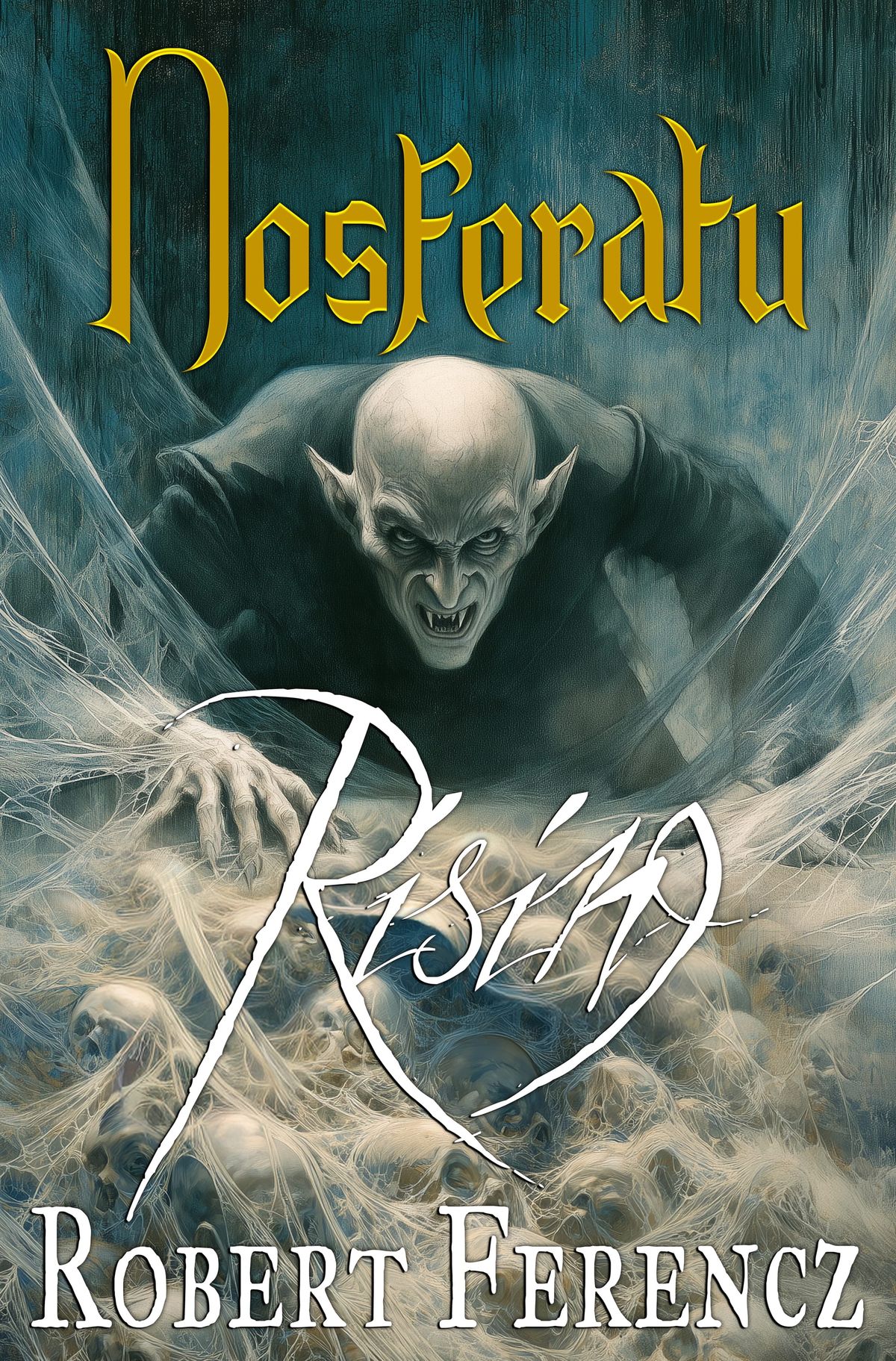
Copyright © 2025. Robert Ferencz. All rights reserved.
This book is a work of fiction. All character names and places are fictional. Any similarity to real life is purely coincidental.
Dedication
This book is dedicated to Rochelle Kelley. Without her love and support, I could have never finished it.
To my grandfather, Joseph Ferencz. His love of classic Universal Horror movies gave me the nightmare fuel needed to write these books. Thanks Pap!
I also want to dedicate this book to my friend Lewelyn Ross, who is the inspiration for the character Brock Lewellen. You’ll be reading about Brock shortly. Thanks for doing the things that so few of us can do and laying it all on the line to protect our freedom.
Quotes
For Jesus had said to him, “Come out of this man, you impure spirit!”
Then Jesus asked him, “What is your name?”
“My name is Legion,” he replied, “for we are many.” And he begged Jesus again and again not to send them out of the area. A large herd of pigs was feeding on the nearby hillside. The demons begged Jesus, “Send us among the pigs; allow us to go into them.”
He gave them permission, and the impure spirits came out and went into the pigs.
The herd, about two thousand in number, rushed down the steep bank into the lake and were drowned.
—Mark 5:8-13 (NIV)
Just what I saw in my old dreams
Were they reflections of my warped mind staring back at me?
‘Cause in my dreams it’s always there
The evil face that twists my mind and brings me to despair
—Number of the Beast, Iron Maiden
ONE
HE AWOKE IN DARKNESS, suffocating in thick humid air.
The first sensation was pain: a throbbing, pounding migraine that seemed to compress his skull from within, pulsing in time with his heartbeat. The next was cold. It leeched upward through his skin, bone, and marrow from the slab of earth he lay on—cold so complete it might have frozen thought itself, if not for the agony in his head. His tongue lolled in his mouth, papery and useless, but the taste of rust and mold filled him anyway.
Yuri groaned. The sound, thin and weak, vanished into blackness. It sounded wrong, as if the space devoured noise as greedily as it swallowed light.
He curled, fetal, knees pulled up to his chin, and pressed his eyelids together in a desperate attempt to wring clarity from the black soup of his thoughts. The only memories he could summon were fragments: a red dress, the tang of gin, a promise of a kiss, the screech of a subway escalator. Then, a blank wall. Now, this.
His neck protested as he forced his head up. He opened his eyes, and after a long, blinking moment, shapes bled out of the dark. He was in a cell—a dungeon, really—with slick stone walls and a ceiling lost in shadow. Water beads clung to moss in the seams of the stonework, catching faint orange glints from a single torch burning just outside a set of corroded iron bars. The torch’s light carved deep shadows down the hallway.
There was nothing in the cell with him. No blanket, no bucket, not even a straw mat. Only the floor, so uneven it threatened to split his spine.
He managed a second sound, part cough and part curse. It echoed back, but not like a proper echo, more like something repeating his voice from the other side of the bars—something trying on his words like a mask before spitting them back at him.
He staggered to his feet. The movement sent fireworks of agony through his legs and hips—he’d been left like this for God only knew how long, and his muscles protested. He tottered, hands pressed to the slime-slick wall, and shuffled toward the bars.
There was nothing to see, only hallway, the torch, another cell door farther down swallowed by gloom. No guards. No other prisoners. No sound but the relentless drip of water landing somewhere just out of sight.
He rattled the bars. The metal felt ancient, brittle with rust, but solid. He leaned his face against the cold, almost welcoming the shock, and peered into the dark.
"Help," he tried. The word was ragged, unconvincing, and his voice cracked in the middle. He cleared his throat and tried again. "Hello?"
Silence, then a scurrying noise overhead. He jerked back just in time to see a plump black rat drop from the ceiling, land with a soft, wet plop, and scamper under the opposite wall. Its eyes flashed, reflecting the torchlight for a fraction of a second before vanishing.
Yuri made a frail attempt to swallow. His throat burned; his whole face felt swollen, alien. The back of his hand was mottled with bruises he did not remember getting. He ran his fingers up and down his arms, chest, and legs, probing for wounds, but only felt the merciless ache of restraint—his wrists raw and ringed with dried blood, as if he'd been bound tightly for hours, then released.
He didn’t remember being tied.
He remembered music, the bar in Ljubljana, high on the hill above the river. He remembered the woman—long black hair, eyes that burned with something electric, an accent he couldn't place. A flirt, a drink, maybe something more. He remembered going to the bathroom, the sticky floor, the urinal with a chipped rim. Then, the feeling of a hand wrapped around his throat, and a needle-prick sting. After that: nothing.
His legs gave out and he sat hard, knees banging against the stone.
He screamed, louder this time, inarticulate and ugly, as if he could brute-force the walls into opening just from the noise.
Nothing. Not even a mocking echo.
Yuri pressed his fists to his temples and rocked, trying to measure time by the drip. It seemed like hours—maybe it was. He drifted, fighting waves of nausea and the deeper, fuzzier sensation of dying. The cell was too cold for sleep, but he lost the thread of time anyway, and when he came to he could not tell if he’d passed out for seconds or days.
His lips bled when he tried to lick them. The torch had burned lower, and the air was even damper. His stomach hurt, a hollow misery that overshadowed the headache now. He crawled to the bars again, and this time he noticed something he hadn’t before: A faint scraping sound from the cell beside his. He squinted into the gloom.
"Hey!" His voice was hoarse, but stronger. "Is someone there?"
He waited, holding his breath. Another scrape, perhaps something being dragged across stone, but no answer.
He pressed his face to the bars, ignoring the grit that scraped his cheek. "Hello? Please. Help. I'm—" He realized he could not remember his own last name. He thought for a moment and then the name "Poliakoff" came to him, dry and useless as old bread. "I'm Yuri Poliakoff. Please."
The scraping stopped. Then, the unmistakable sound of a person sobbing, muffled and pathetic.
"Who's there?" Yuri called.
No answer, just more crying.
He wanted to believe it was another prisoner, but some deeper, more animal part of his brain recoiled. The sound wasn’t right. It rose and fell, but never seemed to breathe. It was too even, too rhythmic. Like a recording.
His vision swam. He retreated from the bars, shaking now from the cold or from the fear. He made it back to the far wall and sank to the floor, pulling his knees up again. The crying kept on, and Yuri pressed his hands to his ears, but the sound burrowed in anyway.
He dreamed, or hallucinated, of the bar again—the woman’s laughter, only now she had fangs, and the shot glass overflowed with black blood instead of liquor. He startled awake, certain he’d heard footsteps in the corridor, but there was only the torchlight, burning lower and lower, and the endless, machine-perfect sobbing from next door.
He slept, or fainted, and when he woke he was flat on his back, his mouth so dry it felt sealed shut. The torch was gone. Only darkness remained, thick as tar, and the smell—he hadn’t noticed it before, but it had grown strong in the absence of light. A sour, metallic reek, halfway between a slaughterhouse and a nursing home. Rot and rust and something else: the mineral sweetness of blood.
He whimpered, too weak for more.
Time became liquid. Sometimes he thought he heard voices, or the shuffle of more rats, or the scraping of a distant door. Sometimes he saw points of light, floating in the air above him, and once or twice he thought he heard the woman’s voice, sweet and cold: "Sleep. It’s easier if you sleep."
The sobbing in the next cell had gone silent, and in its place was the clink of metal against metal—maybe someone scratching on the bars. Or maybe a tongue, running along the iron, tasting it. He tried not to listen, but the acoustics of the place funneled every sound directly into his skull.
At last, when he had lost the ability to stand and even crawling seemed impossible, there was a new noise: a heavy clunk, then the clink of a key in a lock.
Yuri tried to scream, but his lips would not obey. His eyes, rolling in his skull, tracked the sliver of light that appeared as the cell door inched open.
The light was blue, not torch orange, and so cold it hurt his eyes.
He tried to focus on the face that appeared in the doorway, but it was only a black shape, hunched and narrow, with no features. It watched him for a long, silent moment. Then it turned, beckoning with a crooked finger, and another shape appeared behind it. Together, they advanced on Yuri, and as they grabbed him, he felt despair he had never known before.
TWO
BROTHER THOMAS RICHARDSON COULD TASTE THE BLOOD, copper-bright and insistent, at the split in his lip. Every exhale carried its flavor down his tongue, proof of his own unsteady progress. The training hall of the Monastery of the Sacred Rock rang with the wet sound of flesh striking flesh; his bare feet slipped against mat as Brother Hershel closed in.
“You dropped your guard, brother,” Hershel murmured, voice as soft as a caress but accompanied by a jab that caught Richardson in the ribs and threatened to fold him in half. He doubled, gasping, and saw—before his eyes could clear—the stoop and reach of Hershel’s next attack.
The old man fought with the the speed and strength a man is age should not possess. Richardson barely managed to twist away, catching the blow on his left forearm instead of his throat. He staggered, but managed to stay upright.
He thought, not for the first time, that the worst pain didn’t come from the body. It was the mind, the memory—always the memory—that left wounds impossible to heal.
The memory hit him, as it usually did, in the most inopportune moments: the smell of her hair, greasy with the press of fever-sweat, and the way the demon-spawned voice clawed out of her throat. The eyes that were not hers, ringed with purple and red, shining with the ecstasy of some unspeakable knowledge.
Richardson shook the vision off and quickly cleared his mind, staggering back, forced to yield ground. Brother Hershel advanced with a faint smile, as if this was merely a ritual of friendship. But there was no warmth behind the smile, only the patient hunger of a teacher tasked to wring every last ounce of potential from a failing pupil.
“Again,” Hershel shouted. The word echoed against the marble walls with the power of a hammer striking its target.
They circled. Richardson’s breath rasped in his ears, but he forced himself to focus, to anchor his attention in the shifting of Hershel’s hips, the subtle telegraph in his footwork. He had learned more in these few months than in a decade at the seminaries of the old Church. Pain, as it turned out, was the best instructor.
He feinted left, waited for Hershel’s guard to drop, then drove in with a straight punch aimed at the solar plexus. Hershel caught the blow, twisting Richardson’s arm in a vicious lock that sent the younger brother sprawling. The impact with the floor stole his wind, and for a moment the hall dissolved into a haze of red and black.
The memory came again as if it were trying to destroy his focus: the squeal of the pig, the frantic kicking of its legs as the demons boiled into its flesh. Zlo, Bol, and Tuga—named in the Rite by their own howling confessions—each carving a path out of the woman and into the animal. The pig’s skin rippled like water as it was overrun from within, eyes gone mad with a hatred that was almost human.
Richardson forced the memory away, hands scrabbling at the mat as he pulled himself to his feet. Hershel gave no sign of gloating; he merely watched, arms loose at his sides, waiting for the next attack.
“What did you learn?” Hershel asked, low-voiced and nearly kind.
Richardson hesitated, sweat dripping from his nose. “That I am slow.”
“Not slow.” Hershel shook his head. “You are thinking of something else. Of someone else. That is your error.”
A flush crept up Richardson’s face, a humbling heat. He tried to push the memories away, to live only in the moments that mattered, but the past was insistent, gnawing through the present like a maggot through spoiled fruit.
The monastery was supposed to have fixed that. It was supposed to have cured him. Instead, it only stripped away the layers that hid the rot.
He saw now—really saw—the room where they trained. The beautiful Italian marble with its gleaming white patterns. The banners on the walls, each bearing the crimson cross of Saint James the Greater. The faces of the other brothers who lingered at the edges of the room, some feigning disinterest but all eager for the next lesson. They watched Richardson as if he were a caged animal, a curiosity brought in from the wild.
And perhaps he was. He still dreamed of the town, of the days before the exorcism. He dreamed of the way the demon had laughed, promising its revenge on everyone who had wronged it.
He dreamed of the girl and how she begged the demons to come back into her after they had been forcefully cast out by Father Delrosso
“Ready?” Hershel said, voice clipped.
Richardson narrowed his gaze, signaling his readiness without speaking. His hands trembled, but he set his feet, cleared his mind, and waited. This time, he let the pain in his side anchor him, let the ache become his only tether to reality.
When Hershel attacked, Richardson saw the movement before it happened—a tightening of the old man’s left foot, the gathering of muscle in the right leg—and instead of blocking, he flowed with the motion, turning his shoulder to ride out the force. It hurt like hell, but he stayed upright. With his free hand, he struck low, catching Hershel in the thigh, then reversed with an open-handed slap to the ear.
The sound was like a gunshot.
Hershel reeled, staggered, and for the first time in the session, lost his footing. The older man’s eyes widened with surprise, but he recovered, grinning through a trickle of blood at the corner of his mouth.
“Better,” he said, and gestured for a break.
Richardson bent, panting, heart rattling in his chest. He sucked in the air—chilled, dry, full of incense and old sweat—and tried to ignore the look of disappointment on the faces of the other brothers.
In the momentary pause, the memories crept back. They always did.
He remembered the journey to the monastery, the pig in the cage stowed in the hull of that rusted old ship. Its squeals became more guttural, more articulate as they traveled across the North Atlantic. He remembered the way the brothers at the foot of the mountain looked at him when they arrived, as if Richardson was just another vessel for the plague they all fought.
“You’re thinking again,” said Hershel, breaking the silence. He tossed a wet rag to Richardson, who pressed it to his split lip.
“I can’t help it,” Richardson admitted. The words tasted of defeat. “It’s like there’s always a noise, under everything else. A voice. Sometimes three voices.”
“Then you must learn to shout louder.” Brother Hershel seated himself cross-legged on the mat. “Come, sit.”
Brother Richardson joined him, limbs sore and awkward. Together they sat in the half-light, ignoring the prying eyes of the others.
Hershel’s face was a road map of scars and old wounds, each with its own history. He had been a brother longer than any other in the order, and rumor held that he had once exorcised a demon using only his gaze, a stern look that was revered by all who knew him.
“Tell me,” Brother Hershel said. “What do you remember of the exorcism?”
Brother Richardson’s jaw clenched. He had not wanted to speak of it—not here, not ever—but Hershel’s tone left no room for refusal.
“I remember the smell,” he began. “I remember her voice. It would change, sometimes in mid-sentence. It would… laugh at me, tell me things it couldn’t possibly have known.”
He looked at his hands, knuckles raw and peeling. “When we called the names—when we used the Rite—she screamed. But it wasn’t her voice anymore. It was theirs. I remember thinking that the air got thicker, like syrup. The whole room felt like it was full of molasses, and if I stopped moving I’d suffocate.”
Hershel nodded, as if all of this was perfectly ordinary. “And after?”
“We cast them into the pig… well, Father Delrosso did mostly all of the work. ‘Send them into the swine, that they may fall into the abyss.’ But after that, I began to hear voices at night. Three of them. Always laughing.”
They sat in silence for a time, the drone of the other brothers’ sparring filling the space around them.
Brother Hershel leaned in. “You know why we offered you a life here with us? Why the Brotherhood of Saint James seeks out men like you?”
Richardson shook his head.
“We are not men of pure faith,” Hershel said. “We are men who have looked upon the pit and did not flinch. The holy are brittle. They shatter. The damned—those who live with the stink of hell in their nostrils—are far better suited to this work. The Brotherhood exists to use men such as you. To sharpen you. To aim you at the next abomination, and the next, until the day you break.”
A coldness settled in Richardson’s gut. “And if I break?”
“Then you will not be wasted. You will serve as an example, or as fuel for another’s resolve. Nothing is wasted here.”
The words should have been comforting, but instead they felt like a judgment handed down from on high. Richardson wondered how many other men had sat here, on this exact spot, hearing these same words. How many had lasted? How many had vanished into the lower levels, never to return?
He thought of the pig, the atrocity that was now housed in a dungeon cell beneath his feet in this very monastery. He had signed on to not only seek out evil in the world and capture it, but to guard the creatures they used to contain it. There were hundreds of the damned things rotting down there in that basement, each brimming with rage and disgust.
“You will train with me again tomorrow,” Brother Hershel said. He stood with a groan, offering Richardson a hand. “You’re improving. You just need to learn how to use what you are.”
Richardson took the hand, surprised by the old man’s strength. Together they returned to their feet. The training hall had grown quiet; the other brothers had slunk away, their curiosities sated for the day.
As they left the hall, Richardson caught his reflection in a shield mounted on the wall. He looked older than he should have, eyes rimmed with exhaustion, lips bruised and bloody. But there was something new in his face—a hardness, perhaps, or simply the resignation of a man who no longer feared his own failure.
They passed through a corridor lined with portraits, the visages of long-dead brothers staring down with impassive eyes. Brother Hershel walked ahead, limping slightly.
Richardson paused at a particular painting: a man with the same reddish hair, the same pale skin, the same look of grim determination. He wondered if the resemblance was coincidence, or if all men who came here ended up looking the same.
Hershel’s voice called from around the bend: “Do not linger, brother. The night comes early in this place.”
Richardson followed, stepping out of the shadow and into the uncertain light of his new life.
And somewhere, deep beneath the Monastery of the Sacred Rock, something laughed.
THREE
AWARENESS RETURNED IN UNEVEN JOLTS, as if his consciousness were a defective lightbulb blinking on and off at random intervals.
He felt the rough scrape of stone against his naked back, the hard clamp of hands digging into his armpits. He had no control of his legs; they trailed behind him, bumping and scraping up steps, then down again. Sometimes he was weightless for an instant as his captors hoisted him clear of a threshold, then gravity slammed him back into misery.
He tried to raise his head, but every muscle in his neck protested. The only direction was up, chin to sky, eyes squinting at the dimness and the stains that crawled across every surface. Each movement, each shift of his ruined body, spiked fresh agony through his bones. But even that was a relief, a sign he was not yet all the way dead.
He blinked, and in the flickering dark, he caught glimpses of his bearers. They were shaped like men, but their faces had the blank, doughy look of masks left out in the rain. Their hands were too long, fingers curling inward as if to shield themselves from touching human flesh. They did not grunt or speak or even breathe, so far as he could hear; their silence was absolute.
He tried to struggle, but his arms hung limp, slapping against the wet stone. His captors increased their pace, hauling him up a sharp flight of stairs and then through a corridor where the air changed—colder, thinner, with a smell like a freezer full of offal. They moved with unnatural speed, never faltering, never adjusting their grip.
Through the haze, he saw the walls, jagged with ancient bricks and hung with crumbling banners. Sigils he did not recognize—strange crosses, twisted wolves, bleeding moons—were barely visible beneath layers of soot and dried grime. Above, the ceiling arched high and disappeared into shadow, and every step echoed as if in a vast, empty cathedral.
Then, they stopped.
A great door loomed ahead, studded with iron and flanked by carvings of men and beasts entwined in combat. The figures had been worn faceless by centuries of touch, but the violence was unmistakable: bodies split open, wolves gorging on the bellies of the fallen, and the same monstrous visage—a fanged, predatory mask—repeated again and again in different sizes. One of his captors rapped three times, knuckles on wood, the first noise they had made.
From within, a bolt slid back, heavy and slow. The door parted just enough for them to squeeze through, dragging Yuri between them. On the other side, the world changed.
The space was enormous, shaped like the nave of a Gothic church, but twice as wide and far higher. At the ground level was an open floor of stone, ringed by arches that led to other hallways, other mysteries. Above, two stories up, a balcony circled the room completely. It was there, on the balcony, that a silent congregation waited.
He blinked and the shapes resolved: twenty, thirty, maybe fifty figures, each spaced a precise distance from its neighbor, all unmoving. Not statues, but people, or things that wore people’s skin. Some were draped in black cloth, others in fine livery, still others nearly naked except for strange jewelry that glinted with every movement of the torchlight. They did not speak. They did not fidget. They only watched.
His bearers hauled him to the center of the floor, beneath the focus of every glassy gaze. They released him at the base of a circle inscribed into the flagstones, the grooves filled with something that shimmered—silver, or perhaps another unidentified metal. His knees buckled and he sprawled forward, arms useless, face pressed into the cold.
For a long moment, nothing happened.
He panted, dragging air through the tunnels of his nose and out his split lips. His ears rang with the absence of sound. The only movement was the flickering glint of torches, stationed at precise intervals around the lower walls, their flames beating against the dark like insect wings. He shuddered and tried to crawl, but could only twitch and spasm like a fish on pavement.
On the balcony, a ripple passed through the assembly. One figure, taller than the rest, leaned forward just a little, and the whole row seemed to tilt with it—trees bowing to a gust of wind, or an audience at the exact moment a magician reveals his trick. Then, as if on cue, every head cocked at the same angle, all eyes converging on Yuri’s broken body.
He understood, with perfect clarity, that this was not a court of judgment. This was spectacle.
His humiliation—his terror—was tonight’s entertainment.
FOUR
BROTHER THOMAS RICHARDSON MOVED through the gothic halls like a wraith, gliding between pillars and beneath arches that hunched in the dark. The marble beneath his slippers was so cold it bit through the leather soles, sending small shocks up his legs with every step. The corridors were vast, echoing, each footfall was snapped from the air and then thrown back at him by the domed ceilings overhead. He welcomed the sound—proof he was alive, that he was the one haunting the ancient stone, and not the other way around.
The library’s doors awaited him at the end of the corridor, enormous slabs of oak veined with black iron. They reminded him of sepulchral gates in old woodcuts, the kind that led to ossuaries or forbidden crypts. The hinges shrieked in complaint as he leaned his shoulder against the left door and pushed inward. Instantly, the cold intensified, as if the library sucked in heat and life from every soul that entered.
The sight within stilled his heart, as it did every time he entered this astonishing room.
Row upon row of shelves, twenty feet high at least, ascended into a darkness only sporadically broken by oil sconces and flickering tallow candles. Dust motes drifted and swirled in the shifting currents of heat and chill, each mote briefly illuminated in gold before vanishing back into the gloom. The architecture was Romanesque, ponderous and severe; the ceiling groined with interlocking stone, the capitals of every column carved into the stern visages of saints and seraphim. The air stank sweetly of wax, vellum, and the slow fermentation of knowledge.
Richardson hesitated at the threshold, as if expecting someone to tell him he wasn’t allowed to enter this sacred place. He was allowed, however. He was allowed to go anywhere in the Monastery of the Sacred Rock he chose; nothing was off limits to him.
He moved with the caution of a novice, careful not to disturb the silence, reverent this hallowed place and the knowledge it preserved. The shelves nearest the entrance contained works of mundane theology—lives of the saints, treatises on canonical law, ponderous concordances on the Gospels—but Richardson’s interests were less orthodox. His instructions had been clear: learn what he could about the Brotherhood’s less-public work, their true mission, the role he himself was soon to play.
He navigated by the map etched into memory: through the nave, past the codex of the Order’s founder (displayed in a case like a fragment of the True Cross), then left into the ancient section, where the air changed and became somehow drier, thinner, as if the books themselves inhaled the breath from visitors’ lungs. Richardson ran his fingers over the spines—velvet, leather, sharkskin, reptile—each marked in gold or iron with Latin, Greek, sometimes a language he couldn’t decipher. Many volumes had no title at all.
He selected several likely prospects, balancing them on his arm. The first, De Maleficis et Daemonibus, was bound in a suspiciously pale leather; the second, The Book of Legion, shivered under his touch as if charged with static; the last was a simple folio, labeled in neat copperplate as “Archive, Saint James the Greater—Case Histories.” He cradled them as he would relics, and retreated to a marble reading table flanked by large candlesticks and an inkwell choked with quills.
The table was a marvel of craftsmanship: thick slabs of veined white marble supported on sculpted lions’ paws, the edge incised with a frieze of angels impaling demons on spears. He arranged his finds in a crescent before him, then took the stub of a tallow candle from a brass holder and pressed it upright in the nearest socket. He struck a match, the spark hissing loudly, causing an echo in the vast space, and lit the wick.
The candle threw uncertain shadows across his hands as he opened De Maleficis. The pages were thick, edged in red, the script so dense and crabbed it seemed to resist being read. Richardson squinted, deciphering a chapter on possession. The text was methodical, clinical, but its marginalia—notes in a smaller, madder writing—hinted at a world less tidy than doctrine allowed. He read about the taxonomy of devils, their stratification into royals and political leaders, the rituals needed to draw them out, the signs by which a host might be known: the blackening of teeth, the inversion of speech, the weeping of blood.
He shuddered, then forced himself to continue.
Outside the window behind him, the night pressed in. Through the leaded glass, he could see the silhouette of the monastery’s eastern tower, its battlements like the spine of a fossilized beast. Beyond, in the perpetual gloom of the mountains, nothing moved—not even the pale disk of the moon.
He poured himself into the next volume, The Book of Legion. This was less a treatise, more a manuscript of fevered testimonies. He read about a knight, centuries ago, who had gone mad in the Holy Land, babbling of a thousand devils in one body. He read about mass possessions in peasant villages, the exorcists sent to quell them and the violence that always followed. There were diagrams of sigils, some so blasphemous he felt the urge to cross himself after looking. One page, in particular, was devoted to a method of extracting a demon from its host using a combination of fasting, flagellation, and the repeated chanting of a phrase that made his scalp crawl: “We are Legion, for we are many.”
Richardson set the book aside, the tremor in his hands showing more excitement than fear.
He leafed open the “Case Histories.” Here the handwriting was modern, precise, almost bureaucratic. Each entry began with a name, a date, and a diagnosis: “Subject: Anna, Bavaria, 1842—Manifestation: Glossolalia, Levitation, Stigmata. Procedure: Approved. Outcome: Fatal.” The pages were replete with details—sometimes medical, sometimes mystical, always ending in a verdict. He read until the words became blurry and the candle guttered, then snuffed itself, leaving him with only the glow from the corridor sconces and the distant rasp of wind against the glass.
He sat back, dizzy with the overload of new knowledge.
As his vision adjusted to the near-dark, he noticed the figures carved into the capitals overhead. Not saints, after all, but armored men—Byzantine knights, faces blank, all staring outward as if to keep vigil over the library. Their presence comforted him. He could almost imagine them marching down from their perches, books instead of swords in hand, ready to defend the sanctity of the Order’s secrets.
A clock somewhere in the monastery struck the hour: a single, mournful bell. Richardson glanced at the timepiece nailed to the wall—a baroque monstrosity of gears and chimes—and realized he’d been here for nearly three hours.
He stretched, then pulled his robe tighter around him and returned his gaze to the table. His mind worked in rapid circles: the names and procedures, the dreadful fates, the methods of confronting evil as old as time. This was why he had come here—to be part of the Order of Saint James the Greater’s true mission, not the trappings of charity or scholarship, but the war against things that crawled beneath the skin of the world.
He allowed himself a moment to feel pride. Then, a prickling doubt: did he have the spine to face what these pages described? Could he stand in a circle, candle in hand, and stare down an entity that wanted him undone, body and soul?
His answer, silent but certain, was yes.
Outside, the monastery’s façade loomed, the statues of knights and angels now just shadows against the blue-black sky. The wind, having found a way past imperfections in the windows, slipped in and set the candle stubs trembling, their faint scent mingling with the cold.
Brother Thomas Richardson stayed at the marble table, reading on through the candlelight. The only sound was the slow, steady beating of his heart, and the turning of a page, and the quiet, unyielding hunger of a mind seeking to understand its enemy.
FIVE
HE LIFTED HIS HEAD AN INCH, then more. The chamber was silent except for the faint drip, drip, drip of water somewhere in the rafters.
Then a whisper of air, a hush like a curtain drawn, and the sense—utterly certain, utterly primal—that he was not alone here on the main floor.
He shivered, crawling backward on his elbows. His vision narrowed, the corners already tunneling to black, but in the dimness he caught motion: a ripple across the far wall, the brief occlusion of torchlight as a shadow slid from alcove to alcove, never quite resolving into human or animal.
He felt eyes on him. Sometimes in the periphery, sometimes closer, sometimes so near he could smell the cold on its breath. He stopped moving, and the shadow stopped, too. For a long minute, nothing happened. Then, a single footstep, deliberate, almost theatrical.
It entered the circle from the left, barely visible—a deeper shade of black, outlined in blue from the moonlight that slanted through a high, barred window. The shape hunched, crouched, then straightened to its full, impossible height. It wore a coat, or a shroud, that flickered with every movement, and its face was featureless except for a slit of white where the mouth should be.
Yuri tried to scream, but his throat had closed itself off.
The shadow began to circle him, slow and lazy. It never moved closer, never farther, just a steady orbit around his broken form. He turned his head to track it, and the thing sped up—one moment at the far edge of the circle, the next directly at his back, then overhead, crawling along the wall like a spider. With every revolution, it came closer.
At the third lap, it extended one arm, and a single, talon-tipped finger traced the edge of the circle in the stone. The finger paused in front of him, and in a flicker of movement, it struck—a quick, casual swipe at his cheek, barely more than a caress.
The pain was immediate. He felt his skin part, warm blood spilled down his jaw and onto his collarbone. The shadow leaned in, as if sniffing, then recoiled with a satisfied twitch.
The next pass, it drew a line across his forearm, slow and deliberate, leaving a wet, gleaming wound behind. The blood this time came faster, dripping in beads onto the inscribed circle.
The creature paused, cocked its head, and then laughed—a sound so alien, so full of joy and loathing at once, that Yuri almost retched. It circled him again, each pass coming closer, each attack more vicious: a rake of claws down his thigh, a nip at his ear, a gouge at the hollow above his clavicle. He could not move, could barely even process the pain. He was a toy, a slab of meat for this thing to play with.
Above, the audience sat silent as the grave. Their pale faces fixed on the spectacle below.
The shadow moved behind him, and he felt cold hands seize his shoulders. It yanked him upright, exposing his neck. For a moment, the chamber was perfectly, monstrously still. He looked up and saw the creature’s face, at last: not just a slit for a mouth, but a chasm, a black hole lined with needle-like teeth, rows upon rows, stretching too far, a snarl and a grin at once. The eyes above the maw were slits, red-lit, reptilian.
He had time for one last scream, and then the creature struck.
Its jaws clamped around his neck and shoulder, teeth plunging through skin, muscle, even bone. He felt the hot gush of blood, the pop and crunch of cartilage, the relentless, mechanical suction as the monster drank him down. He even felt the tongue of this abomination licking the wound as it sucked from it. There was no tenderness, no hesitation—just pure, primal hunger.
He thrashed, but the creature’s grip was iron. The pain overwhelmed everything then went beyond pain and into something more primal: the knowledge that he was food, fuel, a vessel to be emptied and discarded.
The creature drank and drank, slowing only when the pulse in Yuri’s neck became a trickle. It lifted its head, threads of blood and saliva hanging from its lips. With a gesture almost polite, it let its victim’s body slump to the ground. Yuri’s vision flickered, then collapsed to a pinhole.
But he was not dead.
He floated at the border, aware of every agony, every pulse of blood leaking from his ruined throat. Above him, the crowd began to disperse, faces receding, the sound of shuffling feet echoing into nothingness. The shadow-creature crouched over him, licking the wounds, then drew back, staring at him with something that almost resembled curiosity. For a brief moment, he saw a fragment of humanity in the monster’s expression—a glimmer of satisfaction, maybe even affection.
Then, two men entered the chamber: the same silent, long-fingered things that had carried him before. They scooped him up, blood pooling under their hands, and began to drag him from the circle.
His last sight, before the world truly slipped away, was the streak of red left behind—a bright, glistening trail stretching from the center of the circle to the black maw of the next corridor.
He thought of the woman at the bar, the promise of a kiss, and the darkness that followed.
He thought of nothing at all.
SIX
HE’D LOST ALL SENSE OF TIME. When Brother Richardson next looked up, the world outside had deepened from black to a shade so profoundly blue it seemed like a vast ocean. The only illumination in the library came from the guttered stubs of candle and the feeble glow from the corridor beyond, throwing everything else into velvet shadow.
He flexed his hand, wincing at the pins and needles from hours spent gripping a pen and leafing ancient paper. He was about to rise, perhaps steal some bread from the kitchen, when his eye caught an anomaly in the nearest stack: a wedge of parchment protruding at an odd angle, marked with a leather tab. It wasn’t the orderly, obsessive filing of the monastic librarian. Something about its untidiness called out to him. He reached for it.
The file was a mess—bound with twine, dogeared, the upper right corner stained an unhealthy brown. On the front, in a hand unlike any he’d seen in the Order’s documents, was a single word in red wax pencil:
ORLOK
He stared at it, and a flicker of memory surfaced from years ago: German Expressionism, a midnight screening, the silhouette of a bald-headed vampire stalking up a staircase. Nosferatu. He smiled at the coincidence. His love of horror movies was always frowned upon by the church, but he had never cared. They were fun! A harmless guilty pleasure.
But something cold curled around his heart as he opened the file and thumbed the first page.
It began not with a formal title, but a line scrawled with such agitation that the tip of the quill had punctured the paper in places:
“The raw truth of history hides best in legend.”
Richardson’s smile faded. The pages that followed were chaos: a fever of hand-copied letters, translations from Latin and Middle High German, snippets of newsprint, photographs stapled over other documents, sometimes with handwritten captions in multiple languages. The earliest dated from the early twelfth century, and though the handwriting was florid and alien, the narrative was unmistakable:
Count Dietrich Orlok, decorated Teutonic Knight, had returned from the Crusades transformed. Not only was he changed in aspect—gaunt, pale, eyes like shards of obsidian—but he had brought something back with him. Legion. It was described, at first, as madness: the ability to speak in a dozen voices at once, to echo the words of those around him, to laugh with three mouths though he had only one.
Orlok’s early years were a war of attrition with the darkness. He slaughtered livestock, then peasants, then his own servants; each atrocity more inventive and depraved. At some point, the papacy had dispatched a delegation to assess and, if need be, excommunicate him. None returned.
The pages blurred as Richardson scanned through them. A translation from the original Latin chronicled Orlok’s encounter with the demonic near Gadara—“in regione Gerasenen,” it read, “ubi porci submersi sunt.” He realized with a start this referred to the Gospel story, the casting out of Legion into a herd of swine. The implication was grotesque! Were they trying to say this Orlok person had somehow become a vessel for the demons Jesus had cast out of the man from the tombs in the Gospel of Matthew? The thought was abhorrent!
Next, a letter from King Andrew II of Hungary, inviting the Teutonic Knights to settle in Transylvania. The king’s motive was twofold: reward for service in the Crusades, and to protect the southeastern border of his realm from the Cumans, a waring tribe of Turkic nomadic people from Central Asia.
There were maps, too—hand-drawn, with a place called Castle Sangele Vechi marked in red, and a growing radius of skulls where, over decades, disappearances had been recorded. The last map was modern, a Soviet survey with the castle labeled again labeled “Sangele Vechi.” A note in the margin, in a more recent hand: “Unchanged since first recorded. Subject still active.”
Richardson’s hands had begun to sweat. He wiped them on his robe and forced himself to continue.
There were pages of typewritten summaries—likely compiled by the Brotherhood—charting Orlok’s activities from the medieval era up to the Second World War and beyond. The narrative repeated: reclusion, then outbreaks of violence; local authorities baffled or bought; the steady consumption of the surrounding countryside. In the margins, someone had drawn a spiral, tight at the center and expanding outward, each coil labeled with a century and a tally of missing persons.
The later files were more clinical, more desperate. Attempts to infiltrate the castle had ended in failure or death. Photocopies of photographs—each more ghastly than the last—showed exsanguinated bodies, their faces contorted in terror or rapture or both. A photograph from the 1970s depicted a mass grave, the corpses meticulously arranged as if for a group portrait. Beneath, in pen: “Orlok’s signature.”
Another image, even more recent, showed a customs warehouse in Vienna, crates of human bones disguised as livestock. The ledger attached named the recipient: D. Orlok, c/o Grammstatt Import/Export. The casualness of the commerce made Richardson’s skin crawl.
He reached the last section: a transcript of an interview, or what was left of it, between a Brother of the Order and a survivor. The subject was female, in her twenties, found in a railway station in Prague. The description of her ordeal was vivid and repulsive:
“He did not eat as a man eats. He drank of me, then made me watch him do it to the others. When I was nearly empty, he licked my wounds until I woke. He put us in a pit, all the empty shells drained to near death, and slept on us like a mattress.”
Richardson recoiled, bile slick in his mouth. He pressed his palms to his eyes, hoping to dislodge the images.
He looked down, and only now noticed the file’s final page: a fax from the late 1990s, the Brotherhood’s watermark embossed at the top. The summary was brief, almost fatalistic:
“Final attempt to contain subject has resulted in failure. No survivors. Subject remains at large, expanded territory, new pattern of activity. See attached for updated intelligence. Under no circumstances initiate direct contact. Case sealed until further notice.”
There was a signature—Brother Paolo Matteo, Archivist.
The room felt suddenly close, the ceiling pressing down. Richardson shoved himself from the table, scattering the file’s contents, and staggered to his feet. He could hear his own pulse, thumping in his head, drowning out the hush of the library.
For a moment, he considered running to the Abbot and telling him everything. But the warning at the end of the dossier stilled him. If Orlok was real, and not a centuries-old delusion, then every word in the case file was a death sentence for those who pursued him.
He gathered up the file, hands trembling, and stuffed it back into the shelf, shoving it deeper into the shelf than where he had initially found it.
He was halfway out of the library before he realized he had not stopped shaking.
Outside, the stone knights on the parapet seemed to have shifted their gaze, watching him leave.
SEVEN
SLEEP WAS NOT GOING TO COME for Brother Thomas Richardson; he was well aware of that on the walk from the library to his bed chamber. A disturbing question came to mind as he lay staring at the ceiling: with the knowledge he had just gained, would he ever sleep again?
Morning had come, and Richardson still lay staring at nothing with wide, dry eyes. He couldn’t remember if he had even blinked since he had lay down. This was going to be one of those days he’d just have to suck up and accept. It wouldn’t be the first time in his life he had pulled an all nighter.
Brother Matteo. The name was signed at the bottom of the last document in the ORLOK file. The frail little man who was easily past 90 and was in charge of the archives. Richardson would have to talk to Matteo today; there was no way around it. That old man had knowledge that went further down this twisted path than Richardson could go from just reading a file.
He went about his day as scheduled (daily prayers, chores, training, kitchen work, more prayer). When his free time came in the evening, he didn’t waste a second seeking out Brother Matteo.
The man stood framed in the archway, as insubstantial as a reflection in dark glass. He wore the heavy wool of the archivists’ habit, the hem frayed and stained with candle soot. His eyes, pale as curdled milk, fixed on Richardson with a mixture of pity and accusation.
For a long moment, neither spoke.
“You look troubled,” Brother Matteo said. His voice was brittle, high, the sound of a saw working through bone.
Richardson cleared his throat, acutely aware of the sweat cooling on his upper lip. “Yes, I suppose I do.”
Matteo’s face, already gaunt, seemed to collapse further. “What’s on your mind?”
“Orlok,” he said. The word hung between them like a curse.
Matteo closed his eyes. When he opened them again, he looked ten years older. “Where did you hear that name?”
“I found the file last night in the back of the library,” Richardson said.
“That file is not for you,” Brother Matteo snapped. “Not for anyone, really. It is supposed to be in the secure archives, not—” He cut himself off, his voice thin with fear.
“Why?” Richardson pressed. “Is it fiction?”
Matteo shook his head, the motion almost imperceptible. “It’s easy to indulge in fiction when you're not the one left to pick up the pieces. That file is more real than anything in this place.” He stepped closer, and Richardson noticed the trembling in his hands. “We do not speak that name here.”
The historian in Richardson flared, overriding his better judgment. “What happened?”
Matteo’s lips compressed. He looked over his shoulder, as if the walls themselves might be listening. “A mistake,” he whispered. “We thought we could trap him.”
Richardson felt a chill, but couldn’t stop himself. “What is he? A demon?”
Matteo hesitated, then shook his head again. “A demon wears a face so you may know it is a mask. Orlok’s face is his own, now.”
The silence stretched. Richardson became aware of the slow, arrhythmic ticking of the great clock above the library doors.
“Does the Order still track him?” he asked, softer now. “The last thing I saw in the file was written in the 1990s.”
Matteo smiled, and the expression was bleak. “We know where he is; that’s not the problem. He’s not alone anymore. There are others.” The archivist’s gaze turned to the shadows at the far end of the corridor. “He has a vast network of the most abhorrent people on earth. People in high places all over Europe, especially Eastern Europe.”
Richardson felt the adrenaline, hot and metallic in his veins. “What would you have me do? You can’t ask me to forget this! I thought the whole mission of the Brotherhood was to rid the world of evil? All this training and all of these resources… What’s it all mean if we allow something like this to walk the earth? It’s a detriment to humanity!”
“Keep your voice down!” Matteo barked, and in his voice was a desperation so raw it made Richardson recoil. “If you value your soul, or even your skin, you will never speak of this again. There are things the Order cannot fix. Sometimes the only weapon is forgetting.”
He reached into his sleeve and produced a ring of keys, the kind that would open any door in the monastery. He pressed them into Richardson’s palm, then closed the young man’s fingers over them.
“Return to your room,” Matteo said. “Pray for a dreamless sleep. If you see this abomination in your dreams, you may never sleep again.”
He took two steps back, then vanished into the darkness of the corridor, leaving only the scent of old paper and fear behind.
Richardson stood for a while, the keys heavy in his hand, his mind racing through a dozen possibilities. He knew he wouldn’t sleep. He knew, with a certainty that was almost relief, that he would never forget this.
He entered the library and took a seat at the same marble table where he sat the night before. There, he opened his notebook and began to write, his mind rolling faster than his hand could keep up.
A violent tear ripped through the fabric of reality. It had lurked for centuries, a shadow in the earth's darkest crevices, but now it had slithered into Thomas Richardson’s world. Every breath he took was tainted by the awareness of this looming evil, an abomination so vile it choked the very planet. He couldn’t endure another moment knowing such malevolence went unchallenged.
EIGHT
AT PRECISELY SEVEN MINUTES BEFORE MIDNIGHT, Dmitry Volkov sat waiting in the penthouse suite of Prague’s Alchymist Grand Hotel. Silk drapes, gold-shot and heavy as chainmail, curtained the room from the city’s nocturnal gaze; the polished marble surfaces caught the muted light of antique sconces, scattering it in cold, hard splinters. The air stank faintly of burnt cigars, ozone, and the medicinal tang of cleaning solvent, but it was his body guard, Alexi, whose cologne—loud and citrus—dominated the room. Some claimed they could smell Alexi coming before he entered a room. Volkov wore a suit so well-tailored it seemed to have been stitched directly to his bone. His lean hands, elegant as a pianist’s, rested motionless on either side of a lacquered presentation box atop the table.
Volkov did not rise when Alexi opened the door after the knock. “Come,” he called in a crisp, toneless Russian accent.
Olaf Schreiber entered like a wraith, pale and angular, his eyes sunken behind rimless glasses. His suit was inferior—expensive but off-the-rack. There was no handshake, only a mutual narrowing of eyes and an unspoken calculation as Schreiber crossed the Persian carpet and took the seat across from Volkov. He set down a slim black briefcase with a flick of the wrist, then leveled his gaze at the box between them.
“Is this the piece?” Schreiber asked, voice hoarse from too many nervous cigarettes.
Volkov smiled, but his eyes did not. “The very one. A relic of singular provenance, Herr Schreiber. Are you prepared to authenticate?”
Schreiber exhaled, then produced a jeweler’s loupe from his pocket and a slender digital scale, laying them with ritual care on the table’s surface. “May I?” he said, not waiting for permission. The lacquered box opened with a hydraulic hiss.
Inside, a coin—small, irregular, and odd. Even under the sallow light, the old gold’s patina seemed oily, almost wet, as if it sweated history. The engraving was a Teutonic cross surrounded by a snake devouring its tail. Volkov slid the box forward with a slight flourish. Schreiber, expression unchanged, took the coin between his thumb and forefinger, then paused.
“It’s cold,” he said, not as a question but an observation. “I expected it to have acclimated to the room by now.”
“These things,” Volkov murmured, “do not yield their secrets easily.”
Schreiber turned the coin, scrutinizing the edge and relief. He weighed it, checked for magnetic response, then brought the loupe to his eye. His professional mask never faltered, though Volkov noted the little pulse that started in Schreiber’s temple as he traced the script encircling the cross. After a minute, he set the coin down with a careful deliberation.
“A thaler from the Teutonic Knight’s Transylvanian issue,” Schreiber said. “Early thirteenth century. The only known examples are in the Kunsthistorisches Museum, and those are fakes.” He eyed Volkov. “Where did you acquire this?”
“Let us say it is the fruit of many years’ cultivation.” Volkov steepled his fingers. “Can you value it?”
Schreiber’s lips tightened. “Perhaps. But such pieces—if genuine—are not meant to surface.” He let the implication dangle.
“On the contrary, Herr Schreiber, I believe history must be liberated from its tombs.” Volkov smiled again, showing his tobacco stained teeth. “But you are not here to lecture me on museum ethics. You are here to arrange a sale.”
Schreiber nodded, but his attention had returned to the coin. “Are you familiar with the legend surrounding this artifact?”
Volkov’s eyes flicked up to meet him. “Stories. Every relic accrues them, like rust. Some say the thalers were struck to start a special currency for a new found kingdom the Teutonic Knights were planning to form, stealing land they had vowed to protect under the jurisdiction of the church.”
Schreiber made a neutral noise. But there was hunger in his gaze now, the pretense of skepticism slipping away by degrees.
“The design is anomalous,” Schreiber said, rolling the coin on the velvet lining of the presentation box. “The cross is standard, but the ouroboros is… not documented. It isn’t in the records.”
“A secret order has its secret symbology.” Volkov’s voice was soft and mildly sinister.
They sat in silence for a moment, the ticking of Volkov’s skeleton watch became an irritation for both of them.
Schreiber was first to break. “Five million dollars. American, wired offshore. I take three percent, the rest is yours.”
“Agreed.” Volkov did not blink.
Before Schreiber could elaborate, Volkov’s phone vibrated—a crude, functional model, no camera, no GPS. He checked the screen. His face changed, imperceptibly: a tightening of the jaw, a subtle hunching of the shoulders. He excused himself, turned away, and began murmuring rapid Russian into the phone.
Schreiber, left alone, lifted the coin again. It was heavier than before, as if it remembered being gold, not silver. He held it to the light, scrutinizing the uneven rim and the almost-invisible striations where it had been struck. The surface seemed to pulse with a subcutaneous darkness, like oil floating on water.
On the other side of the room, Volkov’s voice spiked, sharp and urgent. The words “shipment” and “castle” punctuated the Slavic whisper. Schreiber pretended to ignore him, but each phrase seemed to crawl across his skin.
Volkov ended the call and returned, a brittle smile glued in place. “Minor logistics issue,” he said. “Nothing that concerns our business here today.”
Schreiber wanted to believe him. He placed the coin back in the box, snapped it shut, and drew his briefcase close.
“The transfer will be arranged tomorrow,” Schreiber said. “Location?”
“Here,” said Volkov. “Discretion is easier to manage with only two variables. And,” he paused, voice dropping to a near-whisper, “I would urge you to handle the merchandise with care. There are those who believe the coins carry a… legacy of their former master.”
“‘Curse’ is the word you’re looking for,” Schreiber said, unable to hide the dryness in his tone.
Volkov grinned, letting the silence carry his answer.
They stood. The handshake was brief, but Volkov’s grip lingered, fingers digging into the meat of Schreiber’s palm, cold and impossibly dry. “Be cautious, Herr Schreiber. Some histories wish not to be unearthed.”
Schreiber’s professional armor had a crack now, a hairline fissure that widened the longer he was in Volkov’s company. He retreated with the briefcase, not bothering to look back.
Schreiber’s own suite was two floors down, identical in design but void of windows and the ambient menace of the world outside. He laid out the coin and his tools beneath a forensic lamp, letting the blue-white fluorescence burn away the illusions of age. Oddly, the coin seemed to absorb the light, not reflect it. He took high-resolution photos, measured the alloy with a portable XRF gun, and noted the readings. The numbers were wrong: the gold content was too pure; the minute impurities matched no known European mine.
He angled the lamp, searching for micro-abrasions or repair. There—along the rim, a hairline stain, black and glistening, invisible in natural light. He swabbed it with a glass pipette. The droplet stuck to the metal, refusing to let go, as though drawn to it. He touched it with his finger.
A sensation—not pain, not heat, but a cold so absolute it felt hot—raced up his nerve endings and detonated somewhere in his shoulder. He jerked his hand away. The coin flipped, landed upright, spinning once on its axis before falling, heads-up, the cross staring at him with blind authority.
Schreiber stared at his fingertip. There was no mark, no frostbite, nothing. But he felt as if a needle of ice remained lodged just beneath the skin.
He reached again, slower this time, and placed the coin in a glass capsule, snapping the lid tight with a satisfying click. His hands, he noticed, trembled just slightly. He told himself it was the late hour, the thrill of the hunt.
But as he locked the capsule in his safe and lay back on the starched hotel linen, he could not stop imagining the black stain, the way it had pulsed beneath the lamp, alive. He thought of Volkov’s words—some histories wish not to be unearthed—and suddenly the night seemed full of things better left in the dark.
A floor above, Dmitry Volkov and his body guard were already packing for their flight, the scent of Alexi’s cologne filling the room like a French brothel.
“Do you even smell that shit anymore?” Volkov asked.
“What?” Alexi questioned, slightly insulted. “You don’t like my cologne, sir?”
“You smell like a whore I fucked in Belarus,” Volkov said.
“Was she a good fuck?” Alexi asked.
“She was your mother,” Volkov said.
Both men stared at each other for a moment before breaking out into uncontrollable laughter.
NINE
YURI’S FIRST CONSCIOUS SENSATION was the stink. Not a single, definable smell, but an inhuman bouquet: rot and blood, urine and clotted shit, something sweet and sour that might once have been bread, now decaying in a body’s creases. The stink lived, crawled; it filled his nostrils and packed his sinuses with wet, pulpy pressure. It was a tactile thing, this odor, and it pressed down on him with the density of old earth and the force of suffocation.
Somewhere in the darkness, a thin cry echoed. It might have been his own.
He tried to open his eyes but felt them only half respond, as if glued together by the same foul slime that coated his tongue and the roof of his mouth. He pried at his eyelids with phantom fingers—his arms weren’t working at the moment. Blind, nearly deaf, he lay in the belly of something that breathed and shifted around him. The matter beneath his cheek was cold, but everything else was heat—slick, cloying, and so intimate he could not distinguish his own body from those mashed against him. He could feel, unmistakably, the fevered thump of another pulse beneath his ribs. Someone’s head pressed against his chest. A leg, not his, flexed against his thigh. Sweat, or blood, or both, glued him to his neighbors.
He forced one eye open, then the other, fighting for a slit of vision. A ceiling, rough-hewn stone, loomed fifty feet above, lit in guttering torchlight. The walls of the pit rose up on all sides, slick with moisture, red-black with old stains and crawling with wiggling, translucent maggots. He stared until his eyes stung, and the blurred world resolved: he lay at the bottom of a pit maybe twenty feet across, filled wall-to-wall with bodies. Not all corpses—not yet. All of them shuddered, squirmed, or whimpered, making small and terrible noises in their own personal corners of the living heap.
Yuri tried to swallow. His throat worked, but no saliva came. His lips parted; what came out was a gasp, then a dry, spastic cough that racked his frame and jostled the whole layer of bodies. The cry he’d heard earlier, he was able to determine, was not his own, but another’s—a young woman, directly under him, whose face he could not see.
He tried to move—first his fingers, then hands, then forearms, then the full reach of his arm. The signals fired in his brain, but the meat would not respond. After several excruciating moments, sensation finally trickle into his hands, followed by agony: his left arm was pinned beneath three or more bodies, all dead weight. The right arm lay draped over a shoulder, fingers mashed into a sticky mess of hair. Only the smallest movements were possible. With exquisite care, Yuri began the slow process of pulling his right hand toward his face.
He found, to his horror, that the face he touched first was not his own. Another’s—male, perhaps forty, with bristly stubble and lips parted in a snarl. The cheek was cold and slick with congealed sweat, but still it twitched, and when Yuri’s trembling hand made contact, the lips moved. The teeth inside chattered faintly.
“Please,” the man wheezed, his breath hot and sour on Yuri’s fingers. “Water.”
Yuri recoiled. His fingers grazed up, past the dead eyes, and found his own cheek—warm, crusted, and strangely numb. There was a band of dried blood on his neck, crusted thickly where his collar met his skin. He pressed it, gently; no new blood flowed, but the pain was sharp, stinging, radiating in cold pulses down his collarbone. He remembered, suddenly, the bar in Slovenia, the neon beer sign, the sticky table. The beautiful woman, not so beautiful up close, with heavy eyeliner and the scar at the corner of her mouth. Outside, the air was cold and clean. Then: the van, sliding door opening, the dark, muffled arms that closed over his face, a sharp sting at the side of his neck, and—
He shuddered violently. His whole body rebelled at memory, and in that spasm he shifted just enough to feel the woman beneath him stir.
“Help,” she moaned, barely louder than a breath.
Yuri’s face mashed against the greasy mat of her hair. He inhaled, and in the stink, detected something different—a faint, sour sweetness, almost like perfume. He summoned his voice. It came out as a broken, Russian-accented whisper.
“Are you hurt?”
There was a pause. “Yes.”
The word was spoken with the careful precision of someone who had little energy left to speak.
“Where?”
“My legs,” she answered, after a long silence. “And my neck.”
Yuri tried to remember what was said at the bar—Slovene, or was it Ukrainian? She spoke English, at least.
He tested his own limbs again. The left leg responded only with pain—a deep, grinding ache in the thigh and a hot wetness in the ankle that suggested something worse than a bruise. He wondered, briefly, how much blood a body could lose before it lost itself. The thought sparked a sudden, overwhelming anguish.
Around him, the other victims writhed in their layers. A few faces peered at him—some slack-jawed and vacant, others alive with animal panic. A woman’s eyes met his, wide and blue and shining with tears.
“Save your strength,” she said, in a strange, flat accent. “He’ll be coming soon.”
He recognized the timbre—not fear, but resignation. In that tone, Yuri heard a truth: they had all been here before.
“He?” Yuri croaked.
“Count,” said the woman. The word was neither curse nor title; it was an inevitability.
Someone above her, a pale, emaciated boy with stringy blond hair, shuddered and giggled. “The Count will eat us all,” he sang, in a broken baritone. It was clear this ordeal had driven the kid to a state of madness there was no returning from.
Yuri shifted, inch by inch over the bodies beneath him, until he could rest his head against the cold stone wall. He closed his eyes and let the darkness settle over him. Somewhere in his mind, he still clung to the memory of that Slovenian bar, the warmth of vodka in his veins, the idea that everything bad could be erased by one long drink. Here, in the pit, that hope felt thin, and thinner yet as the torchlight guttered and the stink crept deeper into his lungs.
He tried to sleep, but every time he slipped toward unconsciousness, a new pain roused him—a knee in the ribs, an elbow to the nose, a spasm of cold in his lower back. The heap of bodies was restless, a living organism whose smallest motion caused a chain reaction. One man, somewhere near the rim, began to weep with the rhythmic determination of a child. Another barked curses in a language Yuri did not know.
Below him, the woman was silent.
After what felt like hours, the restlessness began to fade. The weeping man went silent, perhaps asleep—or dead. Only a slow, shuddering breathing remained, a sound so uniform it might have belonged to one single monstrous beast.
Yuri drifted. He dreamed of water, of streams winding through a cool forest. He drank, and the water was thick and red, and the river banks were lined with the corpses of animals, their mouths still moving in silent protest. In the dream, he wandered until he found a monastery, its gates open, the stones white and blinding in the sun. A bell tolled. Something enormous and dark shambled from the monastery’s doors, its face a blur, but Yuri felt a strange sense of compassion in it.
He woke with a shudder.
Above the pit, the torchlight flickered. The breathing stilled, replaced by an oppressive hush—a silence so complete it rang in his ears.
Then, from the far side of the pit, came the footsteps.
Heavy at first, echoing through stone and marrow. Bare feet; each step a slap of flesh on wet flagstones. The bodies atop the heap shivered in anticipation, or dread. Yuri could feel the tension—no one dared to move, save for a few who whimpered softly or muttered prayers in tongues he didn’t know.
The footsteps descended, circling the rim of the pit. The first time Yuri saw the figure, it was only a shadow—tall and hunched, its limbs too long to be human. The torch behind the figure cast a monstrous silhouette. The shadow peered over the edge and the pit’s breath grew shallow.
The figure stood motionless for so long Yuri thought it might be a statue, until its head twitched and tilted. Two eyes glimmered in the gloom—obsidian, sharp, catching light like a predator’s eyes. The thing (now verified as a man) was naked. The skin was whiter than bone, stretched thin over the angles of its boney frame.
“What are you?” Yuri whispered.
The woman underneath him wept. “He is the Count!”
Suddenly, the creature—the Count—leaped from the ledge and landed in the pit at the far edge. It reached out one hand, palm open, and ran its fingers along the wall as it crept around the edges. The fingers were too many, or so it seemed in the shifting torchlight; each ended in a claw, pale and jointed, like the legs of some prehistoric insect.
The bodies beneath Yuri began to twitch, some in panic, others in hope. The blue-eyed woman pushed herself upward, exposing her neck. The blond boy whimpered and curled into a ball.
The Count did not look at them. He crawled, spider-like, onto the heap, using his hands and feet with equal confidence. His weight pressed down on the bodies as he clambered over them, indifferent to the cries he caused. When he reached the center, he lay down—full length, as if preparing to sleep—and closed his eyes.
Yuri was now pressed beneath the Coun't’s lower half, unable to move or even breathe without inhaling the sour, ancient stink of the monster’s skin.
The pit went silent, save for the Count’s low, growling breath.
Yuri shut his eyes. He wanted to die, now, before the thing could wake and drain him again. But death was stingy here, and he was forced instead to endure the suffocating weight of the beast as minutes passed, then hours, then the strange, greenish dawn that bled through a slit high above.
At some point, the Count awoke and took his leave. The bodies shifted in his wake, rearranging themselves in hope or despair. Yuri did not open his eyes. He didn’t care, now.
The next time he woke, the pit was emptier. Fewer voices, less motion. The blue-eyed woman was gone; the spot where she’d been was now occupied by the same bristly-faced man who’d begged for water. His lips were blue. His eyes stared, but saw nothing. He hadn’t survived the night.
The woman beneath Yuri was still alive, though weaker than before.
“Are you—” he began, but could not finish.
She answered without prompting. “Marina.”
He nodded, not sure if she could see. “Yuri.”
“You from Russia?” she asked.
“Near Smolensk.”
She made a sound—half laugh, half sob. “I am from Ukraine. Chernihiv.”
They lay in silence, sharing the geography of their misery. For a moment, Yuri found it almost comforting.
After some time, other voices joined them, each with the hollow monotony of exhaustion: a German, once a businessman, now little more than a breathing rag. An Australian, gap-toothed and delirious, who told stories of kangaroos until his lungs gave out. None lasted more than a day, and Yuri wondered if he would outlast them, or if he even wanted to.
Every few hours, the Count returned. Sometimes he ate. Sometimes he only watched, his face so close Yuri could see the movement of tiny veins beneath the skin, like blue worms burrowing through milk. Each time he came, Yuri prayed for death, but death ignored him.
By what Yuri imagined might have been the third day, the pit was much emptier. They came sometimes, odd looking men dressed like slaughterhouse employees. Their faces were completely void of expression. As the pit increased in number, these ghouls were tasked with removing the lifeless. They stomped over the bodies as if they were walking through mud, not caring at all about the screams that came from those who still clung to life. There was a chain that came down from the center of the ceiling they used to secure the dead and hoist them out. The whole operation seemed mechanical, like it had been going on for decades.
The smell was worse now, both from the dead the ghouls had left behind and from the decay in his own mouth and gums. The stone was slippery with runoff. The torch above guttered, nearly spent.
He tried to speak Marina, but her eyes were lifeless. Her head lolled to the side, lips parted in a final, silent word.
Yuri closed his eyes. He was happy for Marina, the young Ukrainian woman he had met in hell. Hopefully she had found peace.
Purchase Nosferatu Rising at any of these bookstores: